
10 Hair Color Theory Guide Concepts Every Stylist Must Master
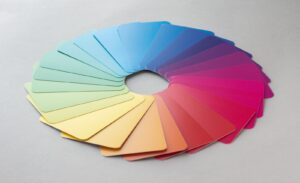
Photo by Andy Brown on Unsplash
The Scientific Foundation of Hair Color
(Concepts 1 & 2)
The most important step before coloring is to understand the client’s hair. Think of the hair as your canvas. You must know what you start with before applying any new color. This begins with the pigments and structure already present. This is your hair color theory guide!
Concept 1: The Two Pigments
(Eumelanin and Pheomelanin)
The natural color of a client’s hair comes from a pigment called melanin. This pigment is made inside the hair follicle. There are two distinct types of melanin. Their balance determines every person’s natural hair color.
Eumelanin: This pigment creates shades of black and brown. A person with very dark hair has high Eumelanin. It sets the overall darkness of the hair.
Pheomelanin: This pigment creates red and yellow tones. Redheads have a high amount of Pheomelanin. In blonde hair, it appears as yellow.
Every hair color has both pigments. The color you see is the effect of these two pigments working together. If you remove Eumelanin, the warmer Pheomelanin pigment is what remains.
Concept 2: The Three-Layer Canvas
(Cuticle, Cortex, Medulla)
To apply color correctly, you need to understand the hair strand’s structure.
1. Medulla: This is the hair’s center or core. It is not very important for the coloring process.
2. Cortex: This is the middle and thickest layer. The Cortex is the most important layer because it holds the natural melanin pigments. Permanent hair color must enter this layer to work.
3. Cuticle: This is the outer protective layer. It is made of flat, overlapping scales. For permanent color to work, the dye uses a chemical agent to open the cuticle. This lets the color reach the cortex.
Photo by Tommy van Kessel on Unsplash
Mastering the Hair Color Theory Guide Tool Kit (Concepts 3-6)
A stylist must use two main systems to analyze hair and choose the right color. These are the Level System and the Color Wheel. They are the key tools in any professional hair color theory guide.
Concept 3: The Universal Level System (Scale of 1-10)
The Level System is a scale that measures how light or dark a hair color is. This system works the same across most color lines.
Levels 1-3: These are dark shades (Black, Darkest Brown).
Levels 4-6: These are medium shades (Medium Brown, Light Brown, Dark Blonde).
Levels 7-10: These are light shades (Medium Blonde, Light Blonde, Platinum Blonde).
When choosing a color, you always start with the client’s current level. Then you choose the target level. For example, moving a client from a Level 5 to a Level 8 is a three-level jump. This requires a strong color lifting process.
Concept 4: The Primary Colors (Red, Yellow, Blue)
The three primary colors—Red, Yellow, and Blue (RYB)—are the base of all hair color. They are “pure.” They cannot be created by mixing other colors.
Blue: The darkest and coolest primary color. It adds depth and coolness to a color mix.
Red: A medium primary color. Red adds warmth and intensity.
Yellow: The lightest and brightest primary color. It makes colors appear lighter and warmer.
When you mix all three primary colors together in equal parts, you create a natural-looking brown.
Concept 5: Secondary & Tertiary Colors
Mix any two primary colors in equal parts to create the Secondary Colors:
Red + Yellow = Orange
Yellow + Blue = Green
Blue + Red = Violet (Purple)
Tertiary Colors are made by mixing a primary color with the secondary color next to it. Examples are Red-Orange and Blue-Violet. The color wheel expands with these shades. This gives the stylist a huge color palette to use.
Concept 6: Tones, Warmth, and Coolness
Tone is the character of the color. Is it a shiny gold color, or is it a flat, cool ash? Tones fit into three main groups:
Warm Tones: Tones like gold, copper, and red. They reflect light and often look vibrant.
Cool Tones: Tones like ash, blue, and violet. They absorb light and look more subdued.
Neutral Tones: Tones that are perfectly balanced. They are not too warm or too cool.
A stylist must be able to spot a client’s natural or existing tone. This judgment is a key part of any professional hair color theory guide. It helps them choose the correct color formula.

Photo by Maksim Chernishev on Unsplash
The Essential Skill: Color Correction and Neutralization
(Concepts 7 & 8)
The best part of a stylist’s work is color correction. This is where the true power of color theory shows itself.
Concept 7: Complementary Colors and the Color Wheel
Complementary Colors sit directly across from each other on the color wheel. When you mix them, they neutralize, or cancel, each other out. This creates a neutral or brown shade. This is the Color Correction Rule.
| Unwanted Tone | Complementary Corrector | Common Application |
| :— | :— | :— |
| Yellow | Violet | To remove brassiness from blonde hair. |
| Orange/Copper | Blue | To neutralize unwanted warmth in light brown hair. |
| Red | Green | To cancel unwanted redness or prevent it in dark hair. |
This process often uses a toner or glaze. It is essential for achieving a clean, balanced final color.
Concept 8: The Underlying Pigment Curve
When a stylist lightens a client’s hair (lifting), the hair’s natural pigment does not just disappear. The dark Eumelanin is broken down first. The warmer Pheomelanin is then revealed in a clear order. This is called the underlying pigment curve.
This predictable curve moves from Red → Red/Orange → Orange → Orange/Yellow → Yellow → Pale Yellow. A professional hair color theory guide teaches you that your target level tells you which pigment you must correct. If you lift to a Level 7, you will expose Orange/Yellow pigment. You must then use a color with a Blue-Violet base. This will neutralize that warmth and create a natural-looking blonde.
The Chemistry and Hair Health
(Concepts 9 & 10)
Knowing the chemistry of the dye is as key as knowing the color wheel. It protects the health of the hair. It also makes sure the color lasts.

“Transparent chemistry glass tubes filled with substances” by Horia Varlan is licensed under CC BY 2.0
Concept 9: The Power of Porosity
Hair Porosity is how well the hair can absorb and hold moisture and color dye.
Low Porosity: The cuticle is tight. Color may struggle to enter. But once it is inside, it holds well. Hair may need more processing time.
High Porosity: The cuticle is damaged and wide open. Color absorbs very quickly. But the color is also lost very fast, leading to quick fading.
Normal Porosity: The cuticle is slightly raised. It accepts color well and gives good, even, long-lasting results.
A quick test of hair porosity is a vital part of the client consultation.
Concept 10: Permanent vs. Semi-Permanent Dye
These dyes work through different chemical steps:
Permanent Color: This dye uses two parts. It has a chemical to open the cuticle. It also has hydrogen peroxide (developer) to activate small color molecules. These molecules grow large inside the cortex. They become trapped for a permanent result. This dye can *lighten* and deposit color.
Semi-Permanent Color: This dye uses color molecules that are too large to enter the cortex. They just coat the outside of the hair strand. It does not lighten hair and washes out over several shampoos.
Learning this difference is crucial for choosing the right product for your client’s needs.
The fundamentals of this hair color theory guide are the best tools you have as a stylist. Your knowledge of color theory—from pigment science to neutralization—will decide your ability to create perfect, healthy, and customized color. Commit time to practice these 10 concepts. Your client is counting on your knowledge to give them a beautiful result.