Beauty School vs College: Which Path Fits Your Goals
The beauty school vs college choice comes down to three things: time, cost, and the kind of work you want. Beauty school trains you for a licensed, hands-on career in months. College takes years and fits careers that require a degree. Neither is better. One simply fits your goals, and the other does not.
This guide compares the two paths side by side, with honest points for each. If you are torn between them, or someone you love keeps asking “but what about college?”, this is for you.
 The Question Behind the Question
 The Question Behind the Question
When people weigh beauty school vs college, they are really asking: what do I want my days to look like?
Picture your working day five years from now. Are you at a desk? In a meeting? Or are you behind a chair, hands in someone’s hair, watching a client light up in the mirror? Your honest answer matters more than any chart.
With that picture in mind, let’s compare the paths on the things you can measure.
Time: Months vs Years
Beauty school is measured in hours, not years. In Utah, nail technology runs 300 hours. Basic esthetics runs 200. Barbering runs 1,000. Cosmetology, the longest common program, runs 1,600 hours. Full-time students can finish even the longest program in well under two years, and shorter ones in months.
College is measured in years. A bachelor’s degree typically takes four. An associate degree takes about two. Add more time if you study part-time or change majors, which many students do.
What that gap means: a beauty school graduate can be licensed and building a client list while a college freshman is still in general education classes. If entering the workforce quickly matters to you, the hours-based path is hard to beat.
Cost: Two Very Different Bills
Beauty school tuition varies by program and school, but the shorter timeline keeps total costs down. Fewer months in school also means fewer months of living costs while you train. Financial aid, scholarships, and payment plans can lower the bill further at qualifying schools.
College costs stack year over year. Tuition, housing, fees, and books across four years add up to a much larger total for most students, and many carry student loans for years after.
The honest caveat: costs vary hugely in both worlds. Compare real, itemized numbers for your actual options. But as a rule, less time in school means less money spent on school.
 What You Learn: Hands vs Theory
 What You Learn: Hands vs Theory
Beauty school is a trade education. From early in the program, you work with your hands. You practice on mannequins, then real clients in a student clinic. You learn a craft the way crafts have always been learned: by doing, with a skilled teacher beside you.
College is mostly a theory education. You read, write, discuss, and take exams. Some majors include labs or internships, but the core of college is study.
Some people thrive on theory. Others sit in lectures feeling their real talent go unused. If you have always learned best by doing, a hands-on program does not just teach you faster. It teaches you the way you are built to learn.
The Outcome: License vs Degree
Beauty school ends with a state license. That license is a legal credential. No one can perform licensed beauty services without one, which protects the value of yours. It marks you as trained, tested, and safe to practice.
College ends with a degree. For some careers, like nursing or engineering, a degree is required and worth every year. For many other jobs, the degree is a general signal rather than a specific qualification.
Ask this: does the career I want require a degree? If yes, college is your road. If the career you want requires a license instead, beauty school is not the fallback option. It is the direct route.
Career Paths: Where Each Road Leads
A beauty license opens more doors than people expect:
- Salon and spa work in every city.
- Barbering and men’s grooming.
- Skin care and esthetics, including med spa settings with advanced training.
- Nail artistry.
- Freelance and event work, like bridal styling.
- Booth rental and salon ownership.
- Teaching, with instructor training.
College opens doors that require degrees: business roles, health care professions, education, engineering, and more.
Here is the part people miss in the beauty school vs college debate: the beauty path includes business ownership early. Many licensed pros rent a booth or open a studio within a few years. The license is a fast track not just to a job, but to working for yourself.
Beauty School vs College Myths
A few old ideas deserve retirement.
“College is the safe choice.” Safety comes from skills people need. People need haircuts, skin care, and nails in every economy. A licensed trade is its own kind of safety.
“Beauty school is for people who can’t do college.” False. Beauty school demands theory too: chemistry, anatomy, sanitation science. Plus a physical craft on top. It is different work, not lesser work.
“You can always do beauty later.” You can also do college later. Many beauty pros return to school for business degrees after building income. The order is yours to choose.
“A degree guarantees a good job.” No path guarantees anything. Degrees help in degree-required fields. Licenses help in licensed fields. Match the credential to the career.
Can You Do Both?
Yes, and some people should. Common combinations:
- Beauty school first, working while taking business classes later.
- A license plus community college courses in marketing or accounting.
- College first, then beauty school as a career change.
There is no rule that says one educational door closes another. If both worlds pull at you, sequence them instead of choosing forever.
Beauty School vs College: Four Deciding Questions
Sit with these. Write your answers down.
- What work makes me lose track of time? If it involves hair, skin, nails, or making people feel beautiful, weight the scale toward beauty school.
- Does my dream career legally require a degree? If yes, college. If it requires a license, beauty school.
- How soon do I want to earn in my field? Months point one way. Years point the other.
- How do I learn best? Doing points to trade school. Studying points to college.
If your answers lean toward the hands-on path, take it seriously. It is a real education for a real career.
A Simple Way to Test Both Paths
Stuck in the middle? Do not decide from your couch. Run this two-week test.
Week one: taste the beauty path. Book a tour at a beauty school. Watch the clinic floor for an hour. Talk to two students. Ask what they love and what surprised them. Then ask yourself: could I see my own hands doing this work?
Week two: taste the college path. Sit in on a college class if you can. Read the course list for a major that interests you. Talk to someone working in a field that requires that degree. Ask the same question: could I see myself in those seats for years?
Then compare how each week felt. Not how each sounded on paper. How it felt in your body. Excitement is data. Boredom is data too.
This test costs almost nothing. It takes two weeks. And it beats months of stewing. Most people who run it stop feeling stuck, because one path starts pulling harder than the other.
A bonus move: talk to one person who chose each path five years ago. Ask if they would choose it again. Their answers will teach you more than any ranking or list. Real people, real years in, tell the truth.
Frequently Asked Questions
Is beauty school considered higher education?
It is postsecondary career education. Qualifying schools can participate in federal financial aid, just like colleges.
Will people respect my choice?
Skilled pros earn respect fast. The person who fixes your color or clears your skin is not asked where they went to college.
Can beauty school credits transfer to college?
Generally the paths are separate, though some business programs value trade experience. Ask specific schools.
What if I start college and want to switch?
You can enroll in beauty school at any point. Many students arrive after a semester or two of college taught them what they did not want.
Choose the Road That Fits
The beauty school vs college question has no universal answer. It has your answer. If your hands itch to create, if you want a licensed trade, and if months sound better than years, the beauty path deserves your full attention.
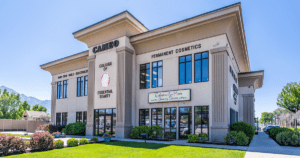
Come see it up close. Cameo College of Essential Beauty in Utah offers tours where you can watch students train, meet instructors, and ask hard questions. Compare that visit to a college brochure. Then trust what you feel.
Program lengths and costs vary. Confirm current program details with Cameo College admissions before making your decision.
Cameo College of Essential Beauty · Murray, Utah
Ready to start your beauty career?
Get hands-on training and see upcoming start dates, hours, and full program details.
View Upcoming Start Dates