
Gel and Acrylic Nail Training: Core Skills You’ll Learn
Gel and acrylic nail training builds one of the most requested skill sets in a nail program. Students learn product mixing first. Shaping comes next. Finish work rounds it out. Each method has its own steps. Both take real repetition to master.
This guide walks through what this training usually covers, step by step.
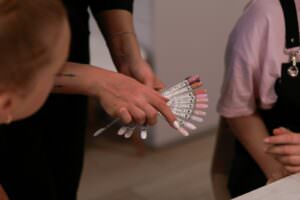
Gel and Acrylic Nail Training: Two Methods, One Goal
Acrylic and gel are different products. Both aim for the same result. That result is a strong, natural-looking nail enhancement. A program teaches both, since salons commonly offer each service.
Acrylic sets in the air, once liquid and powder mix. Gel sets under a lamp instead. This one difference changes the whole application process. It changes timing too. Students learn both processes side by side, so they can offer either service with real confidence.
Sanitation Comes First
Every nail program opens with sanitation, no matter the specific service. Enhancement work uses tools that touch skin closely. Filing and shaping can nick skin by accident. Clean tools matter from day one.
Students learn safe tool handling here. They learn proper disinfection between clients. They also learn safe product storage, since some enhancement products need careful handling.
Prep Work Before Any Product Goes On
Prep work is its own skill, taught before any product touches the nail. Students learn to clean the nail plate. They learn to shape the natural nail first. They learn to apply a primer that helps product stick well.
This step gets more class time than it might seem to deserve. Poor prep leads to lifting later. A well-prepped nail holds product far longer than a rushed one.
Acrylic Application Step by Step
Acrylic work starts with liquid and powder. Students learn to mix the right ratio by hand, using a brush. Too wet, and the product runs. Too dry, and it does not shape well.
Application happens in small, controlled beads. Students place one bead at a time, then shape it before it sets. This takes real practice. Early attempts often look lumpy or uneven. That improves fast with repetition.
Shaping comes right after placement. Students learn to file the surface smooth. They learn to build the right curve and thickness. A well-shaped acrylic nail should look and feel like a strong, natural nail.
Gel Application Step by Step
Gel work follows a different process. Students apply a thin layer of gel product, then cure it under a lamp. This repeats in layers, building the nail up one thin coat at a time.
Layer control matters a lot here. Too thick a layer, and it may not cure fully. Too thin, and it does not build enough strength. Students learn to judge thickness by eye, which takes real repetition to master.
Gel also requires close attention to cure time. Every product cures on its own schedule. Rushing this step leads to soft, weak nails that do not last.
Fill Work and Maintenance
Enhancement training goes beyond the first application. Students learn fill work too. This means maintaining product as the natural nail grows out underneath it.
Fill work calls for its own kind of care. Students learn to blend new product into old smoothly, so the surface looks even. A rough fill line is one of the more common early mistakes, and instructors give it close attention.
Removal Technique
Safe removal is its own unit in most programs. Students learn to remove acrylic and gel without damaging the natural nail underneath. Rushing removal can thin or weaken a client’s real nail.
This step matters for client trust. A client who trusts safe removal is more likely to return for future services. Programs treat removal as seriously as application for this reason.
Nail Health and Common Problems
Enhancement work can affect nail health if done poorly. Programs cover common problems, like lifting, cracking, and infection risk under product. Students learn to spot early warning signs before they turn into a bigger issue.
This section also covers when a service should pause. Some nail conditions mean enhancement work should wait. Learning to recognize these protects the client’s long-term nail health.
Dip Powder as a Third Option
Some nail programs add a third method alongside acrylic and gel. This is dip powder. It builds a nail using powder and a bonding liquid, layer by layer, without a lamp.
Dip work shares some skill with both other methods. Students already know shaping. They already know layer control. This new method adds one more tool to a technician’s full service menu.
A Normal Class Session
Picture a student named Kayla, partway through her enhancement training. A typical class starts with a short demo. An instructor shows the day’s technique on a practice hand first.
Then Kayla practices the same motion, again and again, often on a practice hand before a real client. Her instructor checks her work at each step. Early sessions feel slow and careful. Later sessions feel much faster, once the motion becomes second nature.
Questions to Ask About Enhancement Training
Bring these questions to any program under consideration:
- Does the program cover both acrylic and gel methods in depth?
- How much practice time happens before working on real clients?
- Is safe removal technique part of the core training?
- How does the program cover nail health and common problems?
- What sanitation rules apply specifically to enhancement work?
- How much one-on-one instructor feedback happens during practice?
A well-run program should answer these clearly, with real detail.
Why Gel and Acrylic Nail Training Builds This Way
The order here is not random. Sanitation and prep come first, since every later step depends on clean, well-prepped nails. Application comes next, since it is the core skill. Fill work, removal, and nail health round things out, since they matter across the whole life of a service.
A program that rushes past prep work to reach application faster may leave real gaps. Those gaps tend to show up later as lifting or damage. Knowing this order helps a student judge if a program’s pace makes sense.
Getting the Most Out of This Training
A few habits help here. Practice mixing ratios and layer thickness often, even outside class time on a practice hand. That builds a feel for the product faster than watching alone.
Ask questions about mistakes early. A lumpy bead or an uneven layer is a normal part of learning. Understanding why it happened matters more than getting it perfect on the first try.
A Plain Recap of This Training
Let’s keep this simple. Sanitation and prep come first. Application comes next, in acrylic or gel form. Fill work and safe removal follow that. Nail health rounds things out.
Each stage builds on the one before it. Nothing here is random. Every part has a reason for its place.
By the end, a student can apply either method with steady hands. They can maintain and remove product safely. They are ready to offer this service on a real salon floor.
Keep It Simple: A Few Lines on This Skill
Here is the whole thing, in plain terms. First, you learn to prep a nail right. Then you learn to apply product, in one method or both. Then you learn to maintain and remove it safely.
Every step adds one more real skill. By the end, those skills add up to one of the most requested services in the whole industry.
A Few Plain Words on This Skill
Clean nails first. Then careful product. Then a steady hand. That is the whole idea, in short.
Go slow at first. Ask questions when unsure. Good instructors want you to ask. Trust the order. It works.
Frequently Asked Questions
How long does gel and acrylic nail training usually take? Length varies by school and by how the course is structured. Ask a specific program for their exact hours and timeline.
Is one method harder to learn than the other? Both take real practice. Acrylic depends more on hand-mixing skill. Gel depends more on judging layer thickness and cure time.
Does this training include safe removal technique? Yes, most programs treat safe removal as a core skill, not an afterthought, since poor removal can damage a client’s natural nail.
Do salons usually offer both services? Many salons offer both, since client preference varies. Training in both methods gives a graduate a wider service menu.
Does this training cover nail health, not just application? Yes, most programs cover common problems and warning signs, so a technician can protect a client’s long-term nail health.
See What This Training Actually Covers
Knowing what gel and acrylic nail training actually involves, from prep through safe removal, makes it much easier to judge if a program covers this skill in real depth.
Contact Cameo College of Essential Beauty to ask about enhancement training and how it fits within the full nail technology program.
Program details, hours, and course structure can change. Confirm current information with Cameo College admissions before you enroll.
Cameo College of Essential Beauty · Murray, Utah
Ready to explore Nail Artistry?
Get hands-on training and see upcoming start dates, hours, and full program details.
Explore the Nail Artistry Program