Professional Nail Tools: Manicure & Nail Technician Essentials
Professional Nail Tools Every Future Nail Technician Should Understand
Professional nail tools are not just accessories. They are part of how a nail technician works safely, cleanly, and consistently.
If you are thinking about becoming a nail technician, it is natural to wonder what tools nail techs use for manicures, pedicures, polish, gel, acrylics, nail prep, and nail art. But before you start filling a shopping cart, it helps to understand something important: tools only matter when you know how to use them properly.
A professional-looking nail service depends on skill, sanitation, product knowledge, client consultation, and the right setup. The tools support the service, but training helps students understand when, why, and how each tool should be used.
At Cameo College, future students can explore hands-on training through the Nail Artistry program and learn more about the tools, techniques, and professional habits behind nail services.
Nail Tools Are Part of Professional Training
Many beginners think the first step to becoming a nail technician is buying a full kit of professional tools.
Tools are important, but they are not the whole story.
A file, brush, lamp, buffer, or cuticle tool can be helpful in trained hands. Used incorrectly, the same tool can create poor results, damage the natural nail, or create sanitation concerns.
That is why nail artistry training matters. Students need to learn not only what tools are called, but how they fit into a complete service.
A future nail technician should understand:
- What the tool is used for
- How to hold and control it
- When it is appropriate
- How to clean or disinfect it
- When it should be replaced
- How it affects the final result
- How it fits within state rules and professional standards
The goal is not to own the most tools. The goal is to use the right tools responsibly.
Basic Manicure Tools
A professional manicure usually starts with the basics. These tools help the nail technician shape, prep, clean, and finish the natural nail.
Nail Files
Nail files are used to shape the free edge of the nail. They come in different grits, and the correct choice depends on the service being performed and the nail condition.
Future nail technicians should learn that not all files are the same. A file that works for one purpose may be too aggressive for another.
Good filing technique also matters. Filing should be controlled and intentional, not rough or random.
Buffers
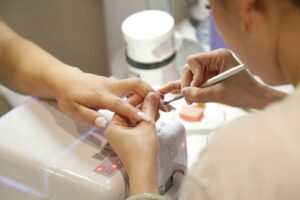
Buffers are used to smooth or refine the nail surface when appropriate.
Students need to learn when buffing is useful and when over-buffing can create problems. Removing too much from the natural nail can weaken it or make it more sensitive.
This is a good example of why professional judgment matters. More is not always better.
Cuticle Pushers
Cuticle pushers may be used to gently push back non-living tissue from the nail plate, depending on the service and the client’s condition.
A future nail technician should learn the difference between careful preparation and aggressive work. The goal is not to hurt the client or damage the surrounding skin.
Pressure, angle, sanitation, and client comfort all matter.
Nail Brushes
Nail brushes can help clean the nail area during certain services.
They may seem simple, but sanitation matters. Students should understand how brushes are used, cleaned, stored, or replaced depending on school procedures, salon standards, and state rules.
Sanitation Tools and Supplies
Sanitation is one of the most important parts of professional nail work.
A beautiful manicure does not matter if the service is not performed with clean, responsible habits.
Future nail technicians may need to learn about:
- Disinfectants
- Clean and dirty tool storage
- Single-use items
- Gloves when appropriate
- Towels and linens
- Trash disposal
- Station cleaning
- Handwashing
- Client safety procedures
Sanitation tools may not feel as exciting as polish colors or nail art brushes, but they are essential.
They help protect clients, students, and professionals.
Polish and Gel Tools
Polish and gel services require control, timing, and product knowledge.
Base Coat and Top Coat
Base coats and top coats help support the look and wear of a manicure. They are not throwaway steps.
Students should learn why these products are used, how they should be applied, and how they connect to the final result.
Polish Bottles and Brushes
Polish application takes practice. The brush, product amount, angle, and pressure can all affect the finish.
A smooth polish line near the cuticle area can be one of the details that separates beginner work from more professional-looking work.
Gel Polish
Gel polish requires additional awareness because the product must be cured properly according to manufacturer instructions.
Students may need to learn about application thickness, curing, safe removal, product compatibility, and how to avoid careless habits that can affect the natural nail.
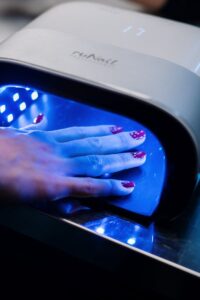
LED or UV Lamps
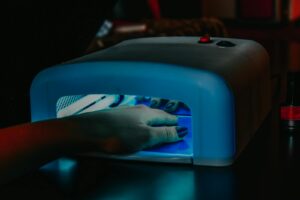
Gel services often require a curing lamp.
Future nail technicians should understand that lamps are not all interchangeable. Product systems may have specific curing requirements, and students should follow school guidance and manufacturer directions.
This is another reason product knowledge matters.
Acrylic and Enhancement Tools
Some nail technicians become especially interested in enhancements.
Depending on training, licensing, and workplace, this may involve acrylic, gel, overlays, tips, forms, or other services.
Common enhancement tools may include:
- Acrylic brushes
- Dappen dishes
- Forms
- Tips
- Tip cutters
- Product containers
- Gel brushes
- Files and buffers
- Dust brushes
- E-files where allowed and properly taught
Enhancement work requires structure, balance, and control.
The tools are only one part of the result. Students also need to understand nail anatomy, product ratios, shaping, thickness, apex placement, safe filing, and proper removal.
This is why enhancement services can take significant practice.
E-Files and Why Training Matters
Electric files, often called e-files, are common in many nail settings, but they should be treated with respect.
An e-file can help refine product and speed up certain parts of a service when used correctly. But improper use can damage the natural nail, cause discomfort, or create poor results.
Future nail technicians should not treat an e-file as a shortcut.
Training matters because students need to learn bits, speed, pressure, angle, sanitation, and when hand filing may be more appropriate.
If you are new to nails, this is one of the clearest examples of why watching videos is not the same as building professional skill.
Pedicure Tools
Pedicure services have their own tools and safety considerations.
Students may learn about implements and supplies used for soaking, nail care, foot care within scope, exfoliation, massage, product application, and polish.
Pedicure tools may include:
- Foot files or paddles where allowed
- Nail clippers
- Toe separators
- Towels
- Bowls or pedicure stations
- Disposable liners or single-use items when required
- Lotions, scrubs, or creams
- Polish or gel products
Future nail technicians also need to understand when a pedicure should not be performed.
If a client has certain skin concerns, open wounds, signs of infection, or medical concerns, the nail technician may need to pause the service or refer the client to a qualified healthcare provider.
Professional nail care includes knowing when not to proceed.
Nail Art Tools
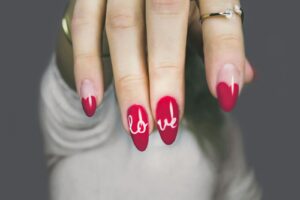
Nail art is one of the most creative parts of nail artistry.
Depending on the service, nail art tools may include:
- Detail brushes
- Dotting tools
- Striping brushes
- Sponges
- Foils
- Chrome powders
- Stickers or decals
- Rhinestones
- Glitters
- Stamping tools
These tools can help create custom designs, but good nail art starts with a strong foundation.
A design will look better when the nail is properly prepped, shaped, balanced, and finished. Future nail technicians should not skip the basics just because art is exciting.
Clean fundamentals make creative work stronger.
Product Knowledge Is as Important as the Tool
Professional nail tools often work together with professional products.
A brush is only useful if the nail tech understands the product being applied. A lamp is only useful if the product cures correctly. A file is only useful if the nail tech chooses the right grit and uses proper pressure.
That is why product knowledge is a major part of nail training.
Students may need to understand:
- What products are designed to do
- Which products work together
- How products should be stored
- How products are safely applied
- How products are safely removed
- What aftercare clients should follow
- What warning signs to watch for
Professional nail work is not guessing. It is learning how tools, products, and technique work together.
Should You Buy Nail Tools Before Starting School?
If you are thinking about enrolling in nail school, ask the school before buying a large kit on your own.
Programs may have specific requirements, kits, brands, supplies, or state-related guidelines. Buying random tools before you understand what you need can waste money or leave you with items you cannot use in school.
A better first step is to ask:
- What supplies are included?
- Is there a student kit?
- What tools do students use in class?
- Are there additional supply costs?
- Can students bring their own tools?
- What brands or product systems are used?
- How are tools cleaned and stored?
This can help you make informed choices instead of guessing.
How Nail School Helps Students Learn Tool Control
Tool control takes practice.
At first, even basic steps can feel awkward. Holding a file, controlling polish, shaping evenly, using a brush, or managing product can take time.
That is normal.
Nail school gives students a place to practice these skills in a structured way. Students can learn how to set up a station, follow sanitation steps, choose tools, use products, and improve through repetition.
The more you practice, the more natural the tools may begin to feel.
Learn Nail Artistry at Cameo College
Professional nail tools are important, but they are only part of becoming a nail technician.
Training helps students understand the service from beginning to end: consultation, sanitation, prep, technique, product use, client care, aftercare, and cleanup.
If you are interested in learning nails in a hands-on school environment, Cameo College’s Nail Artistry program may be a path to explore.
Visit Cameo College’s Nail Atristry program page to learn more about training and enrollment options.
Frequently Asked Questions About Professional Nail Tools
What tools do nail technicians use?
Nail technicians may use files, buffers, cuticle tools, brushes, polish, gel products, lamps, enhancement tools, pedicure tools, sanitation supplies, and nail art tools. The exact tools depend on the service being performed.
Do I need to buy nail tools before nail school?
Ask the school before buying tools. Some programs include a kit or have specific supply requirements. Buying tools too early can lead to unnecessary purchases.
What is the most important tool for a nail technician?
There is no single most important tool. Sanitation supplies, files, buffers, product tools, and brushes all matter. More importantly, nail technicians need proper training and technique.
Are e-files safe for nails?
E-files can be useful when used correctly, but improper use can damage the natural nail. Students should learn e-file technique through proper training and follow school, state, and manufacturer guidance.
What tools are needed for manicures?
Basic manicure tools may include files, buffers, cuticle tools, nail brushes, polish products, sanitation supplies, towels, and products used for the specific service.
Can I learn nail tools from online videos?
Online videos may help you become familiar with tools, but professional nail artistry involves sanitation, safety, technique, state requirements, and hands-on training. Videos are not a substitute for professional education.
Take the Next Step
If you are interested in professional nail tools, nail services, and hands-on beauty training, start by exploring the full training path.
Visit Cameo College’s Nail Artistry program page to learn more about the Nail Artistry program and enrollment options.
Cameo College of Essential Beauty · Murray, Utah
Ready to explore Nail Artistry?
Get hands-on training and see upcoming start dates, hours, and full program details.
Explore the Nail Artistry Program