
Acrylic Nail Application: 6 Steps for Strong, Beautiful Nails
Acrylic nail application is a core skill for nail techs. Clients love acrylic nails for their strength and lasting power. When done right, they look natural and last for weeks.
Learning proper acrylic nail application takes practice. The process involves prep work, product mixing, and shaping. Each step matters for the final result.
This service brings good income to nail techs. Clients pay well for quality acrylic work. They return every two to three weeks for fills. Building acrylic skills builds your business.
This article covers six key steps for acrylic nail application. Follow these to create nails your clients will love.
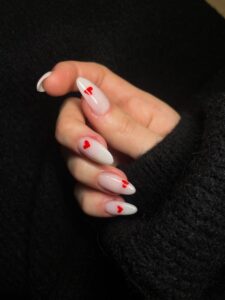
Why Acrylic Nails Stay Popular
Acrylic nails have been around for decades. They remain a top choice for many clients. There are good reasons for this lasting appeal.
Strength is the main benefit. Acrylics are harder than natural nails. They resist breaking and chipping. Clients with weak nails especially love this.
Acrylic nail application allows for length and shape changes. Short nails become long. Wide nail beds look more narrow. The tech has full control over the final look.
Acrylic vs. Other Enhancements
Gel nails cure under UV or LED light. Acrylics cure through a chemical process. No lamp is needed for acrylic nail application.
Dip powder nails use a different method. The nail dips into powder rather than having product applied with a brush.
Each method has its fans. Many clients prefer acrylics for their strength and staying power. Nail techs should master all methods to serve every client.
Step 1: Prep the Natural Nail
Good acrylic nail application starts with proper prep. Skipping this step leads to lifting and other problems. Take your time here.
Start by pushing back cuticles gently. Use a cuticle pusher or orange stick. Do not cut living cuticle tissue. Only remove dead skin.
Removing Shine and Oil
The nail plate must be clean and dry. Use a fine grit file to gently remove shine. This creates texture for the acrylic to grip.
Dehydrate the nail with a prep solution. This removes oils that cause lifting. Apply to the entire nail surface.
Some techs use a primer next. Primer creates a stronger bond between nail and acrylic. Follow your product instructions for best results.
Clean under the free edge too. Debris here can cause problems later. A nail brush helps remove dust and particles.
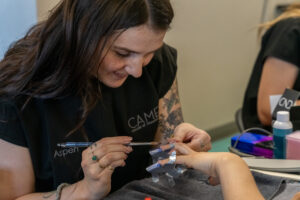
Step 2: Apply Tips or Forms
Acrylic nail application needs a base to build on. Most techs use either tips or forms. Each method has advantages.
Tips are pre-made plastic pieces. They glue to the nail edge and extend length. Tips are faster for beginners to use.
Working with Forms
Forms are paper or foil guides. They slide under the free edge of the nail. The tech builds the extension directly on the form.
Forms allow more custom shaping. Skilled techs often prefer them. They take more practice but offer more control.
Fit the tip or form carefully. Bad fit shows in the final result. Take time to get this right before moving forward.
If using tips, cut and file them to the desired length and shape before applying acrylic. This is easier than shaping after.
Step 3: Mix and Apply Acrylic
The heart of acrylic nail application is the product itself. Acrylic is a two-part system. Liquid monomer mixes with powder polymer.
Dip your brush in liquid, then into powder. This creates a bead of product. The bead should be smooth and workable.
Getting the Right Consistency
Too wet and the acrylic runs everywhere. Too dry and it does not spread. Finding the right mix takes practice.
Start with a medium wet bead for most work. Adjust based on what the product needs. Different brands work differently.
Work in a well-aired space. Acrylic liquid has strong fumes. Good air flow protects you and your client.
Apply the bead near the cuticle area. Use your brush to pat and press it into place. Work the product toward the tip.

Step 4: Shape and Smooth
Once product is on the nail, shaping begins. This is where your art skills show. The shape makes or breaks the look.
Work quickly but carefully. Acrylic hardens as it cures. You have a few minutes to shape before it sets.
Creating the Apex
Every acrylic nail needs an apex. This is the highest point of the nail. It sits about one-third back from the tip.
The apex provides strength. Without it, nails break easily. Press product into place to create this curve.
Use the flat of your brush to smooth. Gentle strokes blend product evenly. Check from the side to see your shape.
The sidewalls should be straight and even. Curved sidewalls look unprofessional. File them straight during finishing.
Step 5: File and Refine
After the acrylic cures fully, filing begins. This step takes time but makes all the difference. Rushing shows in the final look.
Start with a medium grit file. Shape the overall outline first. Check that both hands match each other.
Achieving Smooth Surfaces
File the top surface to remove brush marks. Use long, even strokes. Check your work often by looking at the nail from different angles.
Move to a finer grit to smooth things out. The smoother the surface now, the better the final shine.
Pay attention to the cuticle area. Product should not touch the skin. File carefully to create a clean margin.
Check the thickness. Nails should not be too thick or too thin. Even thickness creates even strength.
Step 6: Finish and Shine
The final step of acrylic nail application is finishing. This makes nails shine and protects them. Clients judge quality by the final look.
Buff the nails to high shine if leaving natural. Use a series of buffers from coarse to fine. The final buffer should create glass-like shine.
Applying Polish or Gel
Many clients want color on their acrylics. You can use regular polish or gel polish. Gel lasts longer but requires a UV or LED lamp.
Apply base coat first. This protects the acrylic and helps color stick. Let it dry or cure before adding color.
Two thin coats of color look better than one thick coat. Let each coat dry before adding the next. Finish with top coat for shine and protection.
Apply cuticle oil around each nail. This hydrates the skin and makes everything look polished. Massage it in gently.
Common Acrylic Problems
Even skilled techs face issues sometimes. Knowing what can go wrong helps you prevent and fix problems.
Lifting
Lifting happens when acrylic separates from the nail. Poor prep is usually the cause. Always clean and dry nails completely before application.
Product touching the cuticle also causes lifting. Leave a tiny gap between product and skin. This prevents problems.
Air Bubbles
Bubbles form when air gets trapped in the acrylic. Working too slowly can cause this. Product starts to cure and traps air inside.
Mix smaller beads and work faster. Apply product in thin layers rather than thick globs. This reduces bubble risk.
Yellowing
White and clear acrylics can turn yellow over time. UV exposure is one cause. Some products yellow more than others.
Using a non-yellowing formula helps. Tell clients to apply sunscreen to their hands. This protects both skin and nails.
Building Your Acrylic Business
Strong acrylic nail application skills attract clients. Word spreads when you do quality work. One happy client brings more.
Offer package deals for new clients. A full set plus their first fill at a discount. This encourages them to return.
Pricing Your Work
Charge what your skills are worth. Underpricing hurts everyone. Research local rates and position yourself fairly.
Full sets take time and product. Price accordingly. Fills take less time but still require skill. Price those fairly too.
Speed comes with practice. Faster work means more clients per day. But never rush quality for speed.
Keep Learning and Growing
Acrylic nail application is a foundation skill. Keep building on it with advanced techniques. Nail art, 3D designs, and competition styles all start here.
Take classes when you can. Trends change and new products come out. Staying current keeps you competitive.
Practice on yourself, friends, and practice hands. The more nails you do, the better you get. Repetition builds muscle memory.
Your nail tech training gives you the basics. Acrylic nail application mastery comes from doing the work. Every set you create makes you better.
Serve Clients with Confidence
Clients trust you with their hands. Acrylic nail application done well shows that trust is deserved. Each client leaves as walking proof of your skills.
Listen to what clients want. Ask about their lifestyle and preferences. A busy mom needs different nails than a bride.
Build relationships along with building nails. Clients who like you return to you. Great service plus great skills equals a great career.
Common Acrylic Questions
Clients ask questions about acrylic nail application. Here are quick answers to common ones.
How long do acrylics last? With good care, two to three weeks before a fill is needed. Some clients go longer.
Do acrylics damage natural nails? Not when applied and removed correctly. Proper technique protects natural nails.
Can I do acrylics at home? Professional acrylic nail application requires training. Home kits exist but results vary widely.
Cameo College of Essential Beauty · Murray, Utah
Ready to explore Nail Artistry?
Get hands-on training and see upcoming start dates, hours, and full program details.
Explore the Nail Artistry Program